
Traveling in Europe as a Celiac: How I Managed (Italy, Spain & France)

When the doctor told me I had celiac disease, the first thing that popped into my head was: “How am I going to eat while traveling?”
If you don’t know what celiac disease is, you can read more here: What Is Celiac Disease?
I was sad back then — and if you’re going through this right now, I truly understand you. It can feel like food becomes a problem and traveling, which used to feel light, turns into a lot of planning.
But here’s the good part: traveling around Europe as a celiac is possible and, in some places (yes, Italy!), it can be much easier than you imagine. I’m going to share my experiences in Spain, France, and Italy — and the method I use to get by safely.
Tips and Experiences
Important notice: this post is based on my personal experience and does not replace medical or nutrition guidance. Rules and menus change; always confirm before consuming and prioritize safety against cross-contamination.
Table of Contents
What changed everything for me: being understood without “teaching a class in a restaurant”
In some countries, we have to explain from scratch what celiac disease is and why it’s not just “removing bread from the plate.” In Italy, I felt something different:
I only had to say in Italian: “celiachia / senza glutine” (celiac / gluten-free) and people already understood. That brings such a huge sense of relief.
Italy: where I felt the safest
Without a doubt, it was the country where I relaxed the most. I found options more easily and felt that many places were more prepared.
Why was it so easy?
- There’s a strong association: Associazione Italiana Celiachia (AIC).
- The AIC Mobile app helps you find establishments and useful info. It shows a map with all certified places — and there are a lot of them in Italy!
- For tourists, there is temporary paid access called “Welcome” in the app. (Usually, associations in Europe charge an annual fee for residents who want access to updates, recipes, and safe places.)
- Tip: confirm prices and rules in the app before traveling, because they can change.
How it helped me in practice
- I didn’t have to rely on “bringing my own food” all the time.
- I wasn’t giving a long speech to the waiter constantly.
- I felt freer to choose restaurants (and the options are very varied).
And yes — I was able to experience Italy in a way I thought was impossible on the day I was diagnosed. Pizza (that pizza!) stopped being just a sad dream and became a possible goal — safely.
Spain: I found places, but I felt a difference
In Spain I found many options, but I noticed some felt more like “gluten-free fitness” rather than truly designed for celiac disease (real cross-contamination control).
An episode in Barcelona (red flag)
In a rush, I ended up going to a random McDonald’s in Barcelona to grab a gluten free hamburger. I asked whether it was safe for celiacs, and the person helping me couldn’t tell me. For me, that’s a red flag. I ate there because I had to catch a bus and didn’t have a quick alternative — and fortunately I didn’t get sick. But today I try not to be without a plan B.
Important: “not getting sick” doesn’t guarantee the absence of traces/cross-contamination. Every body reacts differently.
Helpful resource
If you want extra help, there is an app from the Spanish celiac association: FACE (Federación de Asociaciones de Celíacos de España). The app is called FACEMOVIL (FACE), and like Italy’s AIC Mobile, it lets you see a list of places certified by the Spanish celiac association. However, it’s also paid, and I didn’t subscribe — honestly, I regretted it later, because these apps make it much easier to find safer places.
France: Paris was easy — outside Paris it felt more complicated
In Paris, I found it pretty easy to eat: there are plenty of options and you can plan well. There’s even gluten-free cone ice cream! But outside Paris, I felt more difficulty — most places didn’t understand what celiac disease was.
Helpful resource
An app that may help is Gluton, connected to the French celiac association: AFDIAG (Association Française des Intolérants au Gluten), with trained/referenced establishments. This app is free, unlike FACEMOVIL and AIC Mobile.
How I manage traveling as a celiac
1) I start with the local association (and apps)
Before going, I research whether there’s a celiac association in the country/city and whether it offers an app for celiacs, lists, or some kind of network of better-prepared places.
2) I try to book accommodation with a kitchen (even if it’s minimal)
Having a sink/stove/oven changes everything (at least a stove). It gives me autonomy when I’m tired, when the city is difficult, or when I want to reduce risk.
3) My “secret weapon”: a compact little casserole
I bring a compact camping casserole (light and small), bought at Decathlon (Link to the casserole– I use this one, I bought it at Decathlon in France).
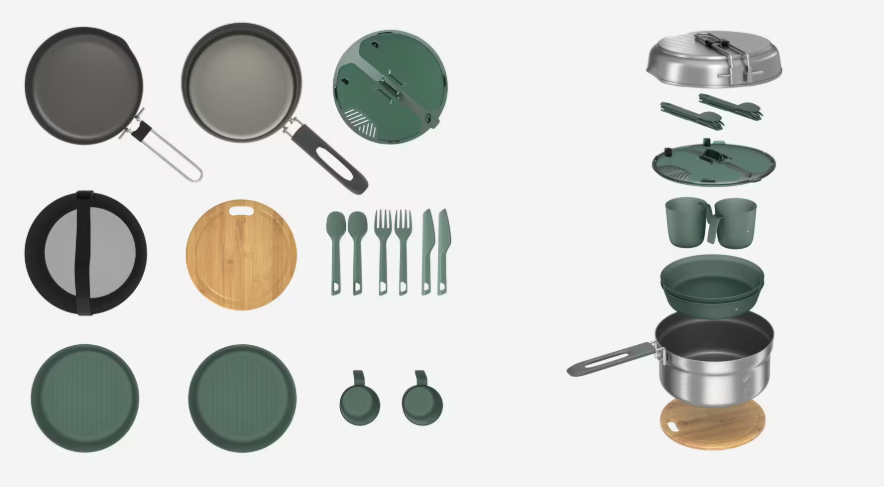
This casserole lets me make simple things with more control: gluten-free pasta, eggs, sauce… and it makes me less dependent on restaurants — plus it fits really well in my suitcase because it’s so compact.
4) The grocery store is the best
I buy food at the supermarket to cook safe meals: gluten-free pasta + ready-made sauce, fruit, yogurt (check labels), and ready salads (with care).
Quick checklist: traveling more safely as a celiac
- Plan B in your bag: a safe snack (so you don’t decide when you’re hungry and rushed).
- Prioritize prepared places: that understand cross-contamination (not just “gluten-free”).
- Ask 3 questions: separate utensils/area? dedicated oil? how do they avoid contamination?
- If they “don’t know,” it’s a red flag.
- You’re not being difficult: you’re taking care of yourself.
If you’ve just been diagnosed and your dream was to travel (or eat pizza in Italy), I want to tell you: it’s not over — it just changed the way you do it. And in some places, it can be easier than you imagine.
FAQ
Is it possible to travel around Europe as a celiac without struggling?
Yes. With local apps, accommodation with a kitchen, safety snacks, and attention to cross-contamination, you can travel with much more freedom.
Is a “gluten-free” option on the menu always safe?
Not always. The key point is cross-contamination control (utensils, surfaces, frying oil, preparation).
What do I do when I need to eat fast?
I try to have a plan B (safe snack) and prioritize places that answer clearly about preparation and contamination.
Resume
| Country | Association | App | Free or paid? |
|---|---|---|---|
| Italy | Associazione Italiana Celiachia (AIC) | AIC Mobile | Paid (tourist “Welcome” access is paid) |
| Spain | Federación de Asociaciones de Celíacos de España (FACE) | FACEMOVIL (FACE) | Paid |
| France | Association Française des Intolérants au Gluten (AFDIAG) | Gluton | Free |