
What Is Celiac Disease?
Let me explain what celiac disease is 😊
Celiac disease is more than just a gluten intolerance. In fact, it triggers an autoimmune reaction: when gluten (a protein found in wheat, barley, and rye) is consumed, the immune system attacks the lining of the small intestine as if it needed to defend itself… when in reality, it doesn’t!
The result: this reaction to gluten can cause poor nutrient absorption and intestinal inflammation 😰
So, when a person with celiac disease consumes gluten:
- The immune system is activated
- It damages the villi of the small intestine
- The ability to absorb nutrients decreases
Possible consequences: chronic fatigue, anemia, nutritional deficiencies, digestive disorders, weight loss… but sometimes no visible symptoms at all!
To this day, the only effective treatment is a strict gluten-free diet for life.
BUT WAIT… Take a breath. 💙
I promise you: it is absolutely possible to live a full, tasty, and peaceful life—even with a celiac disease diagnosis. 💙

If you’ve just been diagnosed, don’t worry: you’re not alone 💙
Celiac disease affects about 1% of the world’s population. Many people go years without understanding their symptoms, because the disease can present very differently from one person to another. That’s one of the reasons diagnosis can sometimes take a long time.
Let’s clarify everything together, so you can feel informed and confident 🥰💙
So… What Is Gluten?

Okay… okay… we already know that people with celiac disease can’t consume gluten.
But what exactly is gluten? And why does it cause so many problems?
Gluten: a protein found in certain grains
Gluten is a group of proteins (gliadin + glutenin) naturally found in grains such as wheat, barley, and rye.
It’s what gives bread its elastic, soft texture.
Where is gluten naturally found?
Gluten is naturally present in some grains:
- Wheat (including spelt, kamut, durum wheat, soft wheat, common wheat)
- Barley
- Rye
- Triticale (a hybrid of wheat + rye)
👉 It can also be found in:
- Processed foods, such as bread, pasta, cakes, cookies, pizza, and breakfast cereals
- Industrial products, like sauces, soups, broths, marinated meats, flavored chips, or filled chocolates
- Non-food products, such as cosmetics that contain cereal extracts
⚠️ It’s also possible to find gluten-contaminated products, such as oats, which may undergo cross-contamination during farming, transport, or processing.
What Is Cross-Contamination?
Cross-contamination happens when a naturally gluten-free food comes into contact—even in a very small amount—with wheat, barley, or rye.
This can occur at any stage: on the farm, in the factory, at the supermarket, or in the home kitchen.
Even a tiny amount of gluten—invisible to the naked eye—can trigger a reaction in someone with celiac disease, because the immune system reacts very intensely.
Common examples of cross-contamination
- Oats grown or processed near wheat
- Fryers used for foods that contain wheat
- Bread or flour spreading gluten “dust” in the kitchen
- Shared utensils and cutting boards
- Industrial equipment processing different types of grains
Cross-contamination is the unintentional contact between a gluten-free food and a gluten source, making that food unsafe for people with celiac disease.
Symptoms: They Vary from Person to Person
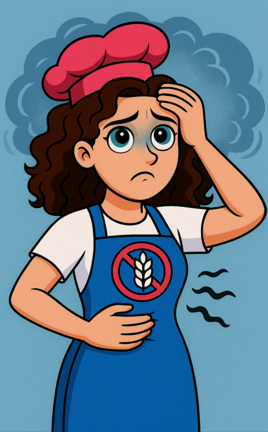
Symptoms can vary greatly from one person to another. A person with celiac disease may experience just one of the signs below or several combined—such as fatigue, irritability, and nausea—or even no symptoms at all!
Yes, some people have celiac disease and feel absolutely nothing. And that’s exactly what makes diagnosis so complicated!
Digestive symptoms
- Bloating
- Abdominal pain
- Diarrhea or constipation
- Nausea
Non-digestive symptoms
- Chronic fatigue
- Anemia, especially iron deficiency
- Headaches or migraines
- Joint pain
- Muscle pain
- Unintentional weight loss
- Dermatitis herpetiformis (itchy skin rash)
- Brittle nails
- Hair loss
- Osteopenia or osteoporosis
- Irritability, anxiety, or depressive mood
- Difficulty concentrating (“brain fog”)
- Infertility or menstrual disorders
- Delayed growth in children
- Recurrent mouth ulcers
In children
- Delayed growth
- Low appetite
- Irritability
⚠️ Important: many people are asymptomatic, but intestinal damage still exists!!!
Risk Factors
A combination of genetics + environment.
Most people with celiac disease carry the HLA-DQ2 or HLA-DQ8 genes, but having them does not necessarily mean developing the disease.
Associated factors:
- Family history
- Other autoimmune diseases (thyroid disorders, type 1 diabetes)
- Intestinal infections in childhood
How Is the Diagnosis Made?
Step 1: Blood tests
The doctor looks for specific antibodies, such as:
- Anti-transglutaminase (tTG-IgA)
- Anti-endomysial antibodies (EMA)
⚠️ Never stop eating gluten before testing, otherwise the results may compromise the diagnosis.
Step 2: Small intestine biopsy
This confirms the disease. At this stage, villous atrophy of the intestine is observed.
Treatment: A 100% Gluten-Free Diet
What must be eliminated
- Wheat (including spelt and kamut)
- Barley
- Rye
- Processed foods containing hidden gluten
- Products with cross-contamination
What is naturally gluten-free
- Rice, corn, quinoa, buckwheat
- Fruits and vegetables
- Meat, eggs, fish
- Legumes
- Nuts and seeds
Over time, the intestine regenerates and symptoms improve.
Symptoms may improve within a few weeks, but in some cases recovery can take months or even years. This depends on the initial condition of the intestine and the level of damage. But one thing is certain: little by little, you’ll start to feel better and have much more energy 😁.
Living Well with Celiac Disease
The challenge: cross-contamination
A single breadcrumb can be enough to trigger a reaction. Some examples:
- Using the same cutting board
- Toasting in the same toaster
- Cooking in a shared fryer
The positive aspects
Many people discover:
- A more mindful way of eating
- New flours and flavors
- Increased energy after transitioning to a gluten-free diet
Frequently Asked Questions
❓ Can celiac disease disappear?
No. It’s a lifelong condition, but perfectly manageable.
❓ Is it possible to be celiac without symptoms?
Yes, very common. This is known as the “silent” form.
❓ Does the diet need to be strict?
Yes: even small amounts of gluten damage the intestine.
❓ Is “gluten-free” by choice the same?
No. For people with celiac disease, exclusion must be total, strict, and monitored.
You Are Not Alone
Receiving a diagnosis can be destabilizing—I deeply understand that.
But with the right information, care, and a supportive community, celiac disease does not prevent you from living a life full of flavor and freedom.